the approach
Six principles I work by.
- #01
presentations work as stories.
A series of well-crafted slides in the same file can still add up to a presentation that doesn't really work. Individual moments may look polished on their own but don't always come together into something coherent if nobody designed the story connecting them. I think about presentations as a whole rather than slide by slide.
- #02
form and content evolve together.
I reject the "designer steps in at the end to make it look good" model. The strongest work comes from collaboration where the designer understands the story well enough to actively respond to it. That level of involvement turns the process into a collaboration rather than a visual handoff.
- #03
slides play different roles.
Before thinking about form or looking for references, I ask what role the slide is playing in the presentation and how that moment connects to what comes before and after. Some slides slow the pace. Others guide attention, create contrast, or move the narrative forward. Understanding the function gives the design process a clearer direction. Otherwise it's easy to mistake a beautiful solution for the right one.
- #04
context changes the experience.
Presentations become much stronger once the conditions around them are treated as part of the brief. A live talk, a keynote projected in a large room, and a deck being read alone on a laptop all ask for different things even when the content itself is identical. Those conditions shape everything from pacing and hierarchy to typography and density.
- #05
accessibility is part of the craft.
I think of accessibility less as compliance and more as clarity. A presentation that's easier to read, easier to scan, and less dependent on ideal viewing conditions is easier to understand for everyone in the audience. Less constraint, more good communication practice.
- #06
audiences need different things.
The audience changes the way a presentation needs to be structured. People already familiar with the subject connect ideas more easily because they bring part of the context with them. Audiences encountering the story for the first time need more guidance through it. That shapes structure, pacing, and the amount of context the presentation needs to provide.
selected work
A few projects, told as case studies.
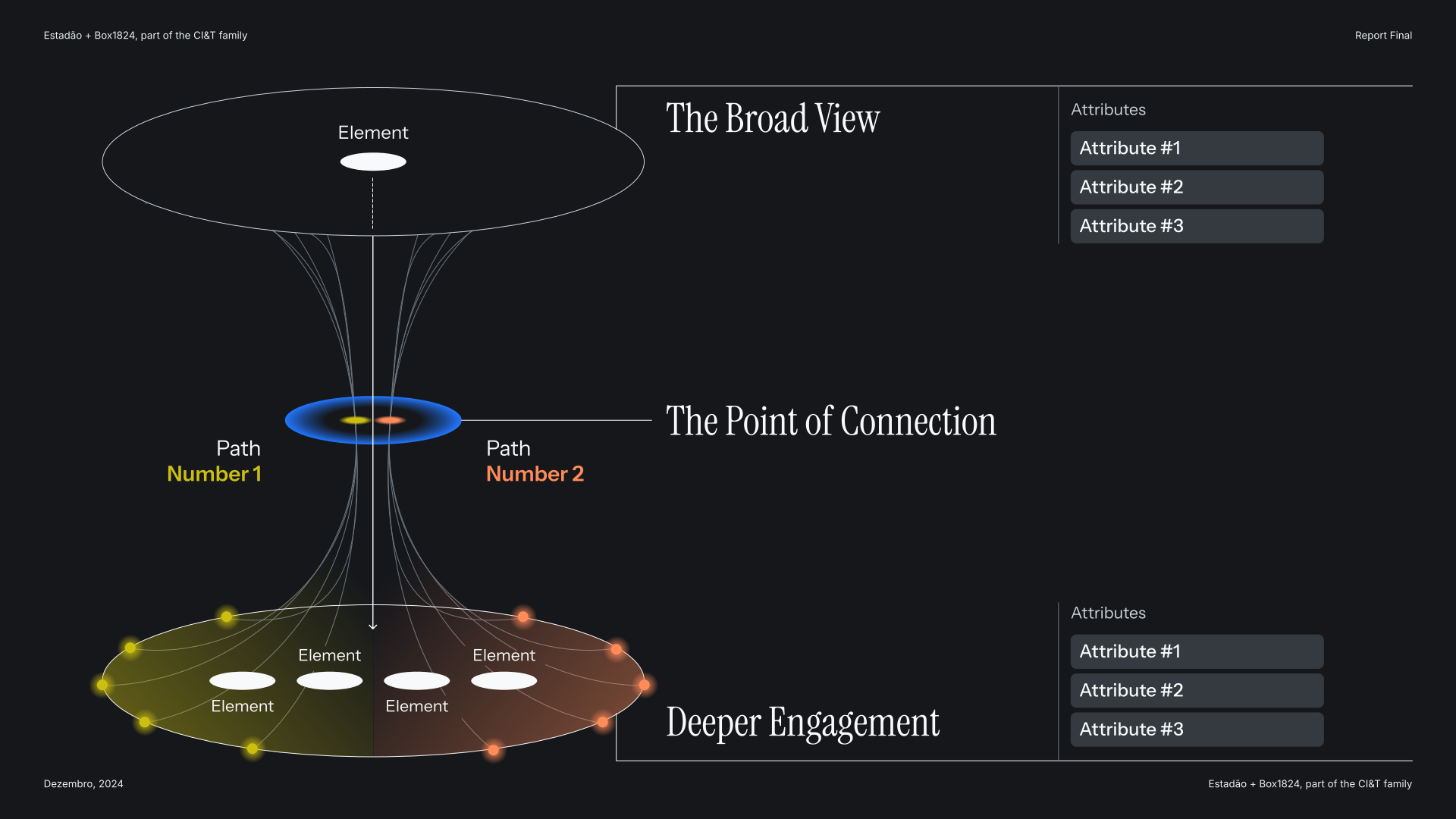
Estadão 2024
Translating 1,263 interviews and a 150-year strategic review into the deck Box1824 delivered to Estadão.
→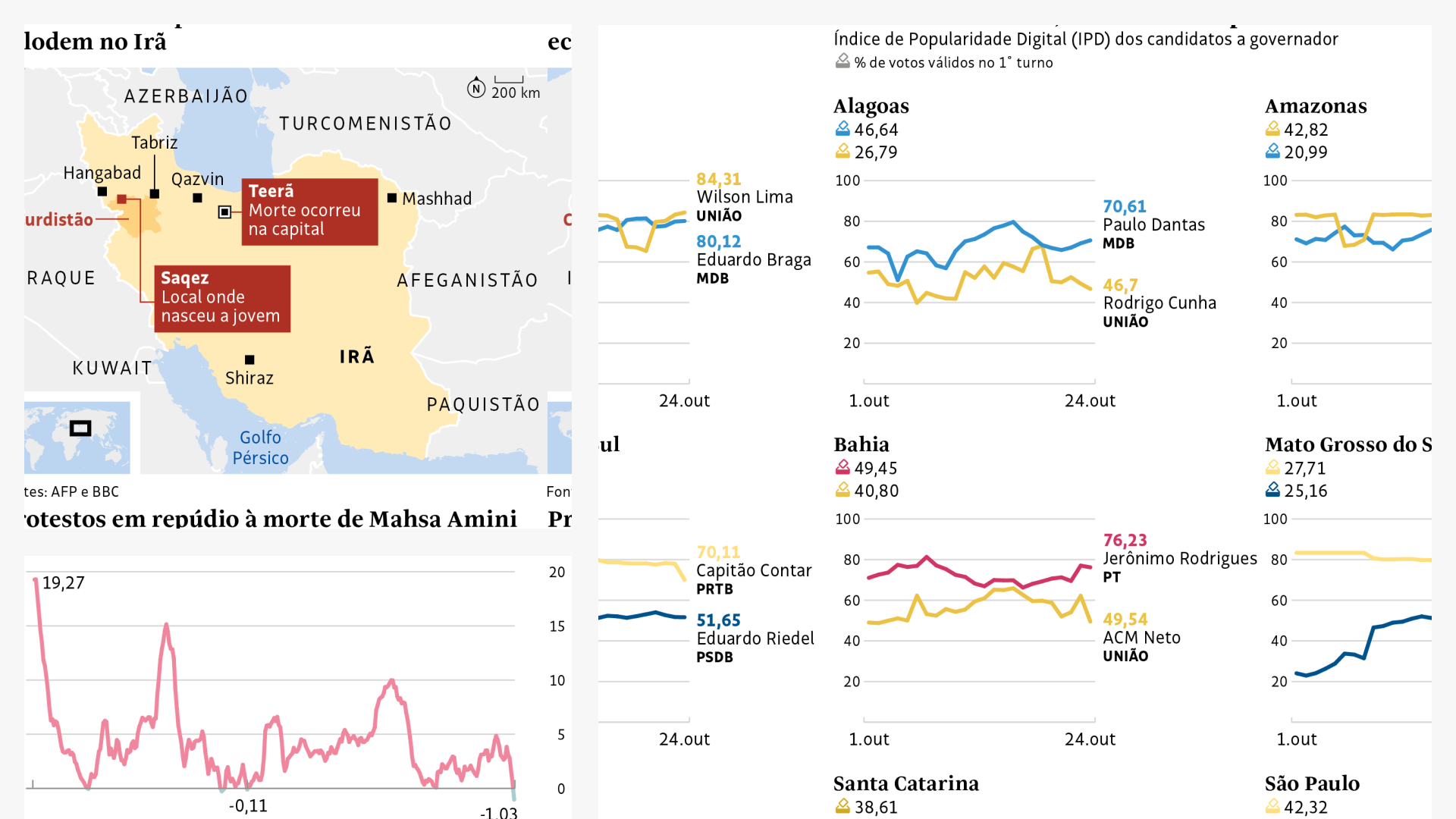
Folha de S.Paulo 2022
Information design and data visualization during Brazil's 2022 presidential election period.
→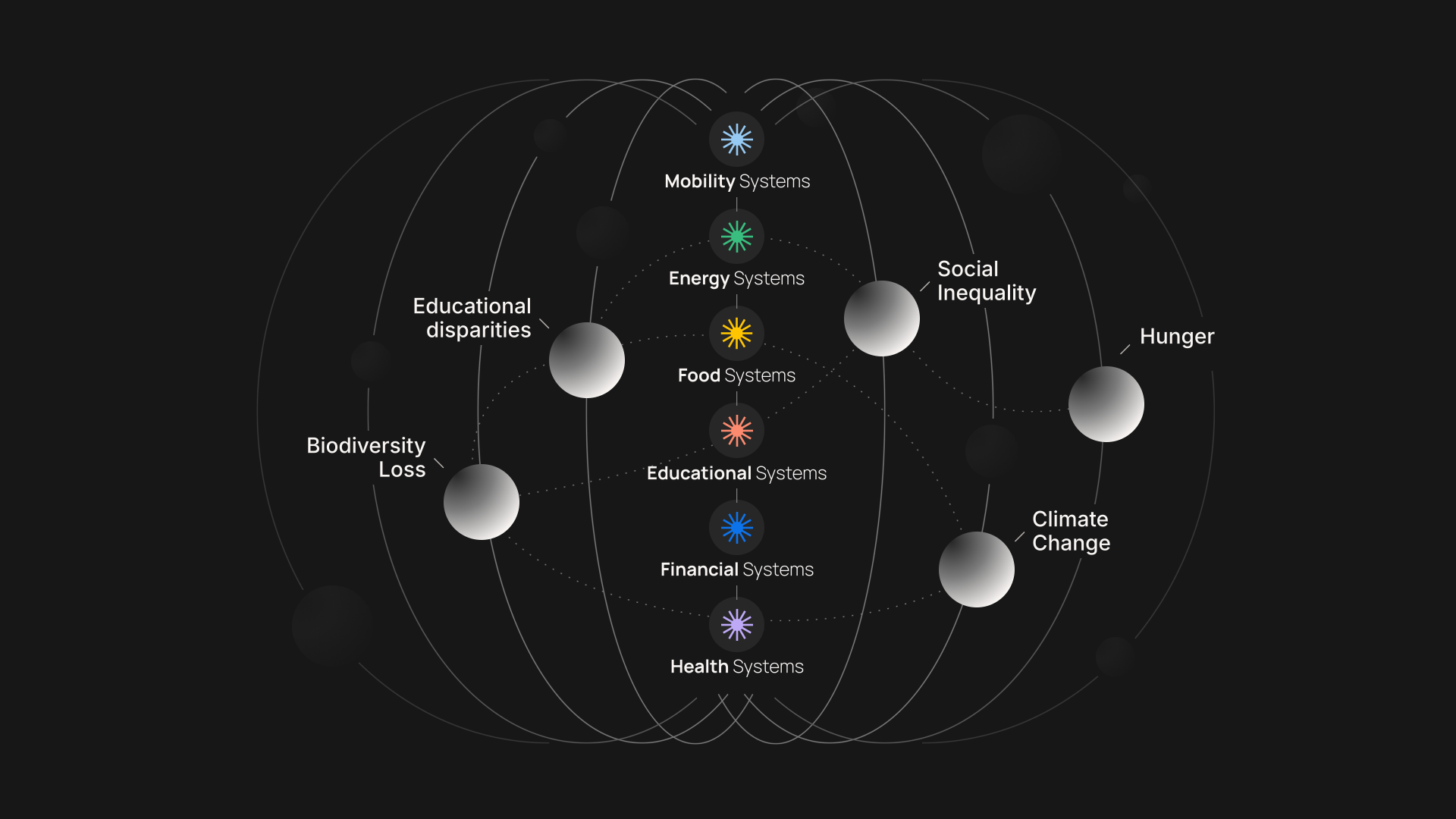
Mútua 2023
Designing a taxonomy to help impact capital navigate complex systems.
→
services
Two ways to work with me.
group session
A content-heavy session anchored in my six principles. We walk through each one with examples and discussion. By the end, designers leave with a framework they can apply to their own work.
Optional take-home: The Full Pass. A way to walk any brief through all six lenses, on your own time, no submission, no follow-up required.
developing presentations
I partner with you as a co-author on form and structure. I engage deeply with the content to shape the design around the story, while the writing stays with the content owner.
Best fit: people who already have content (or a clear outline) and want a designer who engages with the story, not just visualizes what's handed off.
about

I'm Natália Revelant Ferreira, a designer based in Lisbon.
Over the last decade, I've worked across visual storytelling, information design, and presentation design. Most of that time was spent helping organizations make sense of complex topics, whether through research reports, strategic narratives, data visualizations, or presentations designed for high-stakes conversations.
My practice is rooted in the belief that design is not simply about making information look better. It's about helping people understand it. The projects I enjoy most sit somewhere between structure and storytelling: organizing complexity, revealing patterns, and building narratives that make ideas easier to navigate.
Today, alongside visual storytelling, I'm expanding my practice into digital product design, exploring how the same principles of clarity, systems thinking, and visual storytelling can help shape better user experiences.